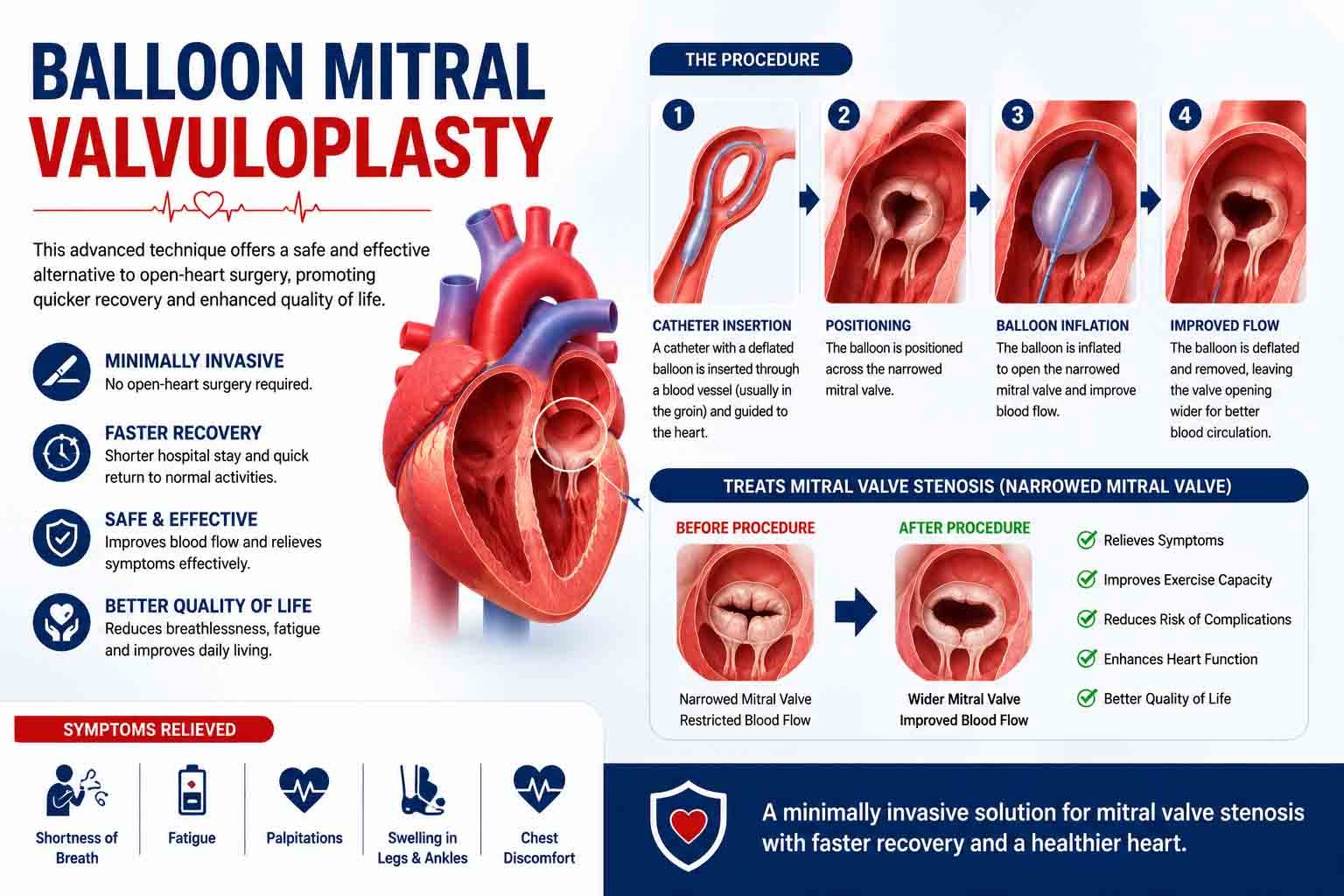
Balloon Mitral Valvuloplasty (BMV), also known as Percutaneous Mitral Balloon Valvotomy (PMBV), is a minimally invasive cardiac procedure used to treat mitral valve stenosis, a condition in which the mitral valve becomes narrowed and restricts blood flow between the left atrium and left ventricle of the heart.
This advanced technique offers a safe and effective alternative to open-heart surgery by using a specialized balloon catheter to widen the narrowed valve opening, improving blood flow and reducing symptoms. Balloon Mitral Valvuloplasty helps patients experience faster recovery, shorter hospital stays, and a better quality of life.
Mitral valve stenosis occurs when the mitral valve becomes thickened, stiff, or narrowed, making it difficult for blood to flow efficiently through the heart. The condition is commonly caused by rheumatic heart disease but may also result from age-related changes or congenital valve abnormalities.
Common symptoms include:
During the procedure, a thin catheter with a specially designed balloon is inserted through a blood vessel, usually in the groin, and guided to the heart. Once positioned across the narrowed mitral valve, the balloon is carefully inflated to separate the valve leaflets and enlarge the valve opening. This improves blood flow without the need for open-heart surgery.
Benefits of Balloon Mitral Valvuloplasty
For suitable patients, Balloon Mitral Valvuloplasty provides excellent long-term outcomes with significantly less discomfort than surgical valve replacement. The procedure effectively improves valve function, reduces symptoms, and helps prevent complications associated with severe mitral stenosis.
With expertise in structural heart interventions and minimally invasive cardiac procedures, we provide comprehensive evaluation and personalized treatment plans for patients with mitral valve disease. Our goal is to restore healthy heart function, improve daily living, and deliver the highest standard of cardiac care.
Early diagnosis and timely treatment of mitral valve stenosis can help prevent complications and ensure better long-term heart health.