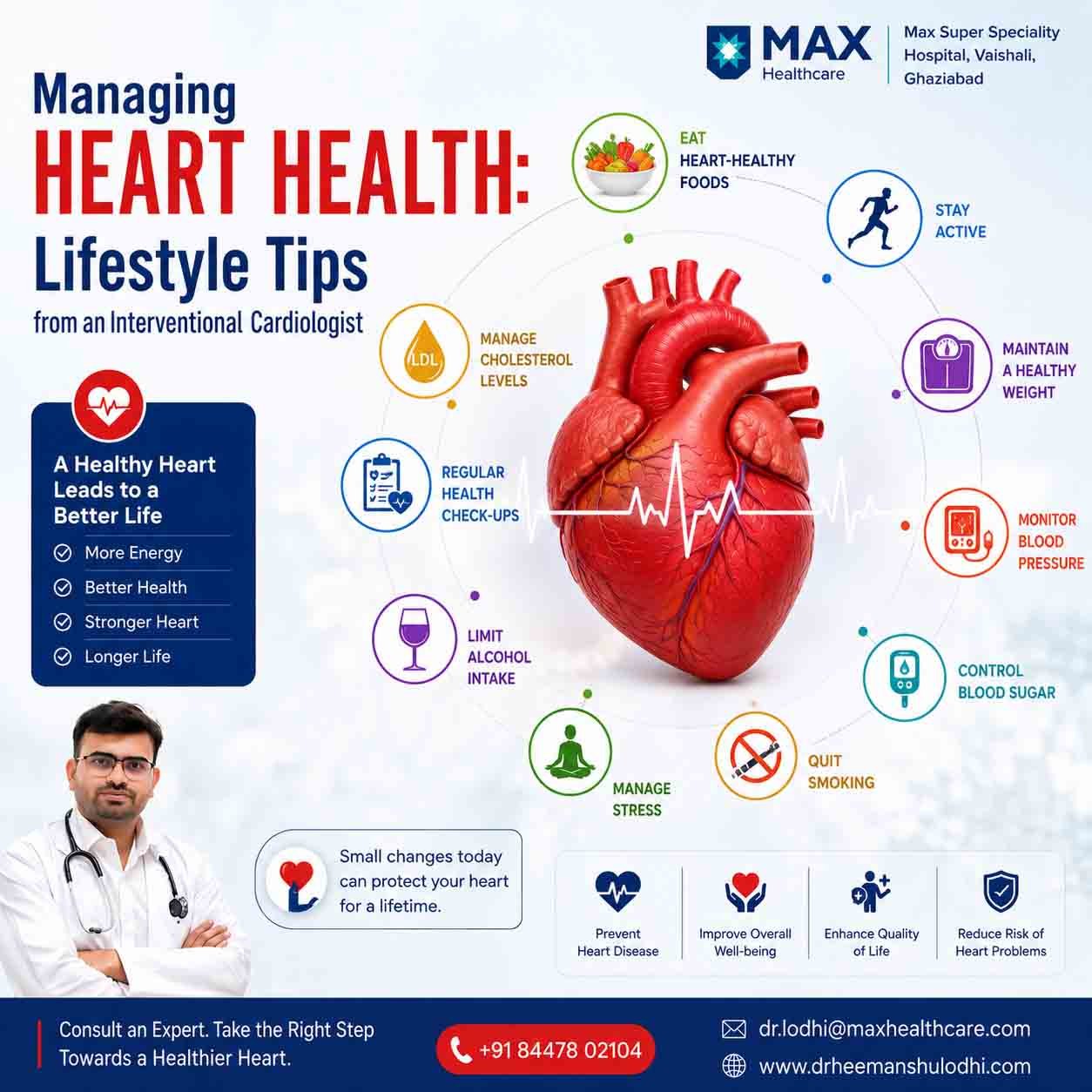
Heart disease remains one of the leading causes of death worldwide, but the good news is that many cardiovascular conditions can be prevented or managed through healthy lifestyle choices. While advanced treatments such as angioplasty, stenting, and other interventional procedures have significantly improved patient outcomes, maintaining good heart health starts with everyday habits.
As an Interventional Cardiologist, I often emphasize that prevention is just as important as treatment. By adopting heart-healthy practices, you can reduce your risk of heart disease, improve your overall well-being, and enjoy a longer, healthier life.
Your heart works tirelessly to pump blood and oxygen throughout your body. Factors such as high blood pressure, diabetes, obesity, smoking, stress, and unhealthy eating habits can gradually damage your cardiovascular system, increasing the risk of heart attacks, strokes, and heart failure.
Fortunately, simple lifestyle changes can have a profound impact on your heart health.
A balanced diet is one of the most effective ways to protect your heart.
A heart-healthy diet helps control cholesterol levels, blood pressure, and body weight.
Regular exercise strengthens the heart muscle and improves circulation.
Experts recommend:
Even 30 minutes of daily physical activity can significantly reduce the risk of cardiovascular disease.
Excess body weight places additional strain on the heart and increases the risk of:
Achieving and maintaining a healthy weight through diet and exercise can greatly improve cardiovascular health.
High blood pressure is often called the "silent killer" because it may not cause noticeable symptoms.
Regular monitoring helps detect problems early and allows timely intervention. Most adults should aim for a blood pressure below 120/80 mmHg, unless otherwise advised by their physician.
High cholesterol contributes to plaque buildup inside the arteries, increasing the risk of heart attacks and strokes.
To maintain healthy cholesterol levels:
Uncontrolled diabetes can damage blood vessels and significantly increase cardiovascular risk.
Key steps include:
Smoking damages blood vessels, reduces oxygen supply, and accelerates plaque formation within arteries.
Benefits of quitting smoking include:
It's never too late to stop smoking and start improving your heart health.
Excessive alcohol intake can lead to:
If you drink alcohol, do so in moderation and follow your doctor's recommendations.
Chronic stress can negatively impact heart health by increasing blood pressure and promoting unhealthy habits.
Stress management techniques include:
Taking care of your mental health is an important part of protecting your heart.
Routine medical check-ups can identify risk factors before they become serious health problems.
Important screenings include:
Early detection allows for timely treatment and better long-term outcomes.
Seek immediate medical attention if you experience:
Prompt evaluation can prevent serious complications.
An Interventional Cardiologist specializes in diagnosing and treating heart conditions using minimally invasive techniques such as:
While these procedures are highly effective, adopting a heart-healthy lifestyle remains the foundation of long-term cardiovascular wellness.
Managing heart health is a lifelong commitment that involves healthy eating, regular exercise, stress management, and routine medical care. Small changes made consistently can significantly reduce your risk of heart disease and improve your quality of life.
Whether you have existing heart disease or simply want to protect your cardiovascular health, taking proactive steps today can lead to a healthier future. Consult an experienced cardiologist for personalized guidance and regular heart health assessments to keep your heart strong for years to come.