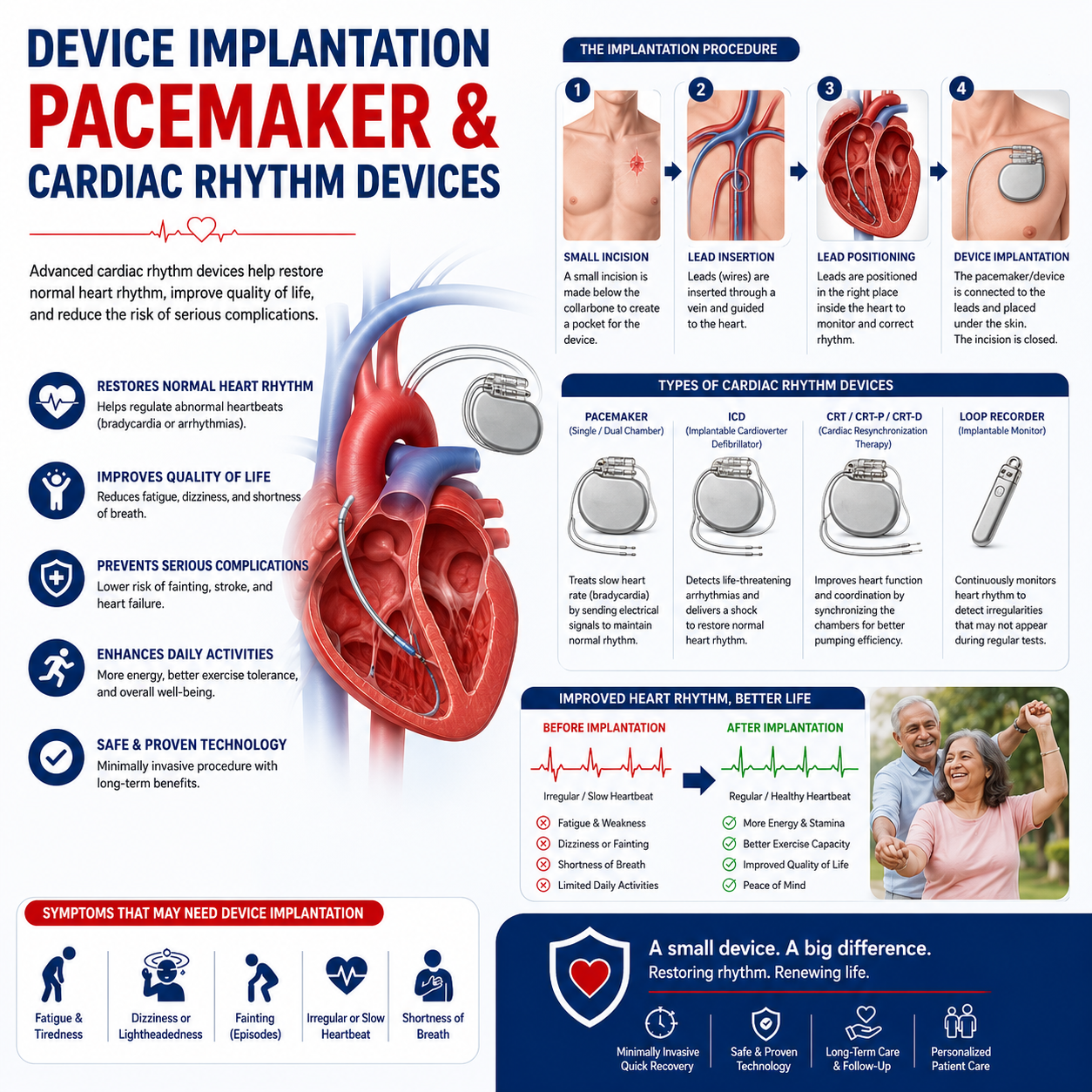
Device implantation is an advanced cardiac procedure used to treat abnormal heart rhythms (arrhythmias) such as bradycardia (slow heart rate) and certain forms of tachycardia (fast heart rate). These conditions can affect the heart's ability to pump blood efficiently and may lead to dizziness, fatigue, fainting, heart failure, or even life-threatening complications.
A pacemaker or other specialized cardiac device is implanted to regulate the heart's electrical activity and maintain a normal, healthy heart rhythm. These devices continuously monitor the heartbeat and deliver electrical impulses when needed, ensuring optimal heart function and improving overall quality of life.
A pacemaker is a small electronic device implanted under the skin, usually near the collarbone. It is connected to the heart through thin wires called leads. The device monitors the heart's rhythm and automatically sends electrical signals when the heartbeat becomes too slow or irregular.
Helps maintain a normal heart rate in patients with slow or irregular heart rhythms.
Detects and treats life-threatening rapid heart rhythms by delivering corrective electrical therapy when necessary.
Improves the coordination of heart contractions in patients with heart failure, enhancing heart function and reducing symptoms.
Device implantation is typically performed under local anesthesia with mild sedation. The device is placed beneath the skin through a small incision, and leads are carefully guided into the heart using advanced imaging techniques. Most patients can return home within a day or two and resume normal activities shortly afterward.
Modern cardiac rhythm devices are highly reliable, safe, and effective. They provide continuous monitoring and treatment of heart rhythm disorders, helping patients live longer, healthier, and more active lives.
With expertise in electrophysiology and cardiac device therapy, we provide comprehensive evaluation, implantation, programming, and long-term follow-up for pacemakers, ICDs, and CRT devices. Our goal is to deliver personalized care that ensures optimal heart rhythm control and improved cardiovascular health.