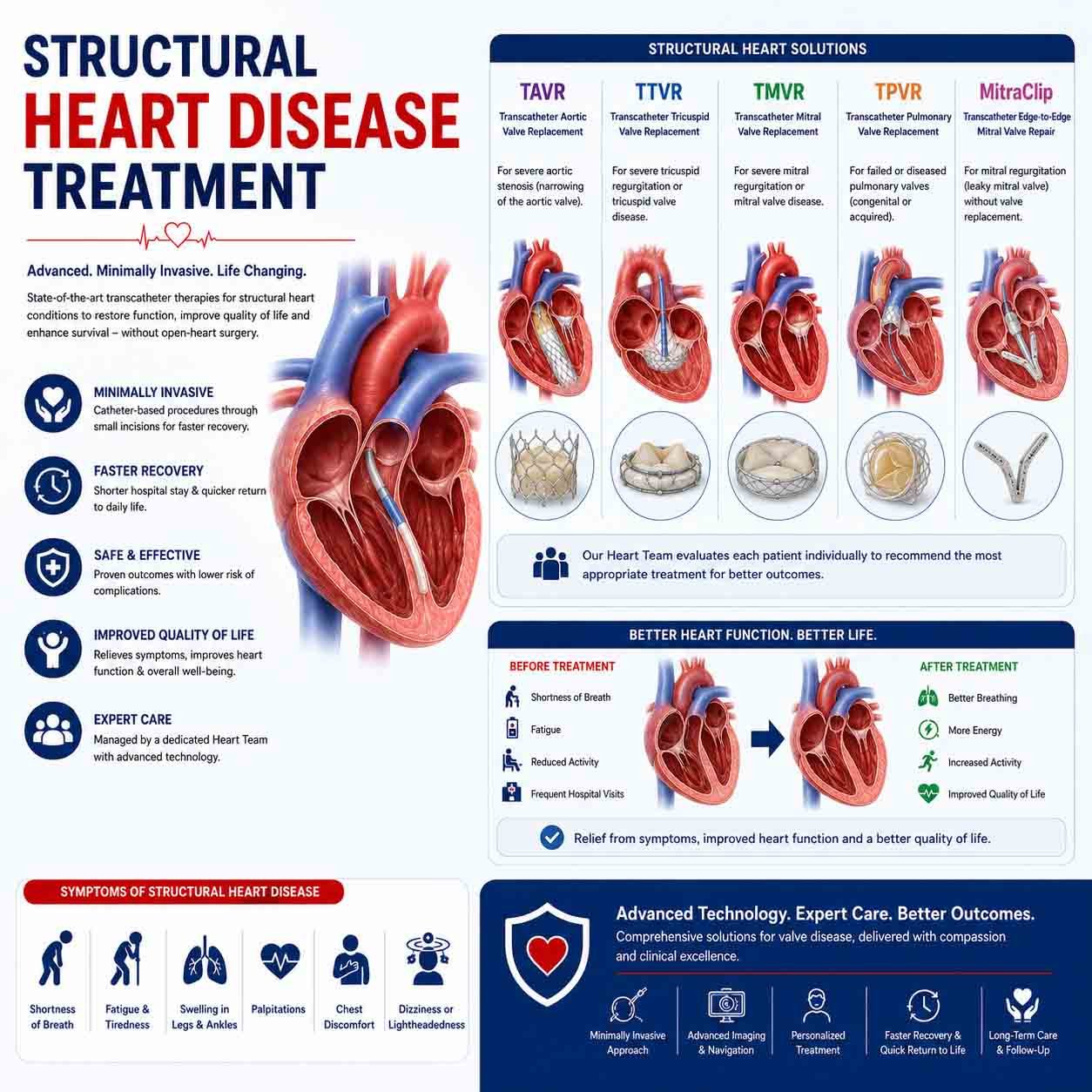
Structural Heart Disease refers to abnormalities of the heart valves, chambers, walls, or blood vessels that affect the heart's ability to function efficiently. Advances in interventional cardiology now allow many structural heart conditions to be treated using minimally invasive catheter-based procedures, eliminating the need for traditional open-heart surgery in suitable patients.
Modern structural heart interventions such as TAVR, TTVR, TMVR, TPVR, and MitraClip offer safe and effective treatment options that help restore heart function, relieve symptoms, and improve quality of life while ensuring faster recovery.
TAVR is an advanced procedure used to replace a severely narrowed aortic valve without open-heart surgery. A new valve is delivered through a catheter and implanted within the diseased valve, restoring normal blood flow.
TTVR is a minimally invasive procedure used to repair or replace a diseased tricuspid valve. It helps improve blood flow and reduces symptoms such as swelling, fatigue, and breathlessness associated with tricuspid valve disease.
TMVR provides a catheter-based solution for patients with severe mitral valve disease who may not be suitable candidates for open-heart surgery. The procedure restores proper valve function and improves blood circulation.
TMVR provides a catheter-based solution for patients with severe mitral valve disease who may not be suitable candidates for open-heart surgery. The procedure restores proper valve function and improves blood circulation.
MitraClip is an innovative treatment for mitral regurgitation (leaky mitral valve). During the procedure, a small clip is attached to the mitral valve leaflets to reduce leakage and improve heart efficiency.
Structural heart procedures offer advanced treatment options for patients who may be at high surgical risk or seeking less invasive alternatives. These therapies provide excellent clinical outcomes while reducing discomfort, recovery time, and procedural complications.
With expertise in complex valve interventions and structural heart disease management, we provide comprehensive evaluation, advanced imaging, personalized treatment planning, and cutting-edge catheter-based therapies. Our goal is to restore optimal heart function, improve symptoms, and help patients return to healthier, more active lives.
Early diagnosis and timely treatment of structural heart disease can significantly improve long-term cardiovascular health and overall well-being.